Adaptability of a native grasstree – study delivers new insights
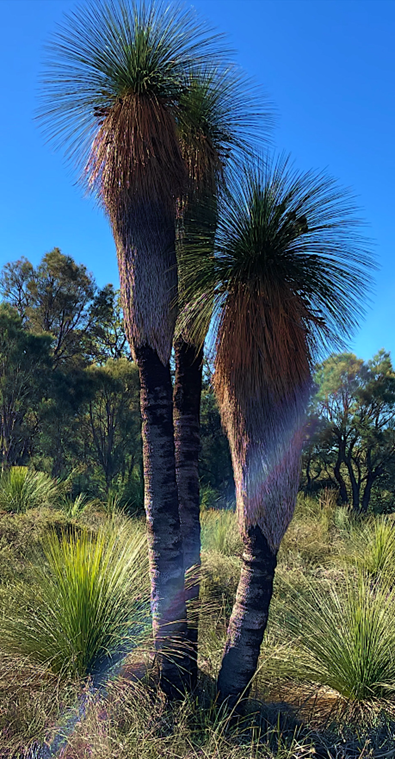
Clump of three grasstrees, Kingia australis, 4 m tall, in an old swamp near Perth. It is endemic to southwestern Australia and is a relic of wetter times. It produces a crown of ‘drumsticks’ unlike the long flower spike of other grasstrees. Image credit: Byron Lamont
A surprising discovery on the banks of the Sabina River near Busselton has revealed the iconic Kingia australis hides a remarkable root system never before documented by science.
The Curtin University-led research found dense clusters of ultra-fine roots buried deep in the soil, boosting the plant’s surface area for nutrient uptake by up to 70 times – a likely key to its survival in the nutrient-poor soils of WA’s South West.
Lead author Emeritus Professor Byron Lamont, from Curtin University’s School of Molecular and Life Sciences, said the structures were discovered by chance after winter rains eroded part of the riverbank and exposed them.
Professor Lamont said: “These roots are unique to Kingia and seem to function like a hidden superpower.
“We’ve named them ‘kingioid’ roots and they could help explain how this ancient plant has adapted to some of WA’s toughest growing conditions.
“The study highlights the ecological importance of local species and the potential for more discoveries in the South West’s biodiverse landscapes.”
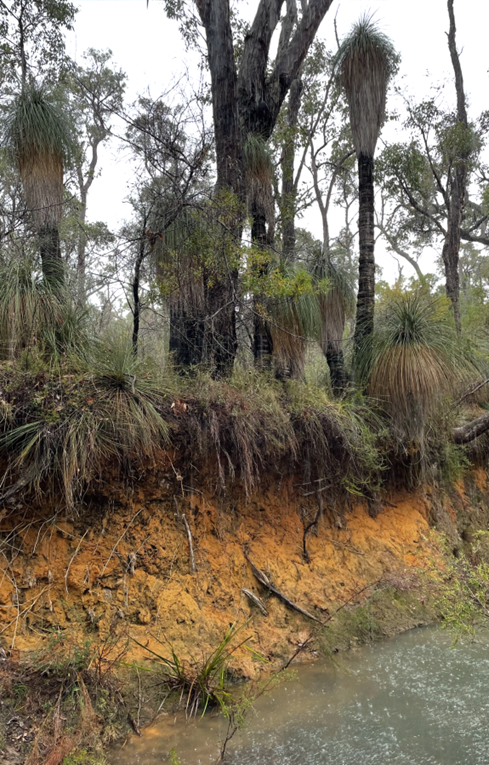
Eroded bank of Sabina River near Busselton that revealed the root systems of Kingias growing on the bank. Image credit: Byron Lamont
When not in flower, Kingia Australis (family Dasypogonaceae) resembles the grasstree (Xanthorrhoea sp), however, the two genera are not closely related.
Specimens of Kingia australis, were first collected by Robert Brown at King George Sound in 1801. The plant featured in the drawing View of the south side of King George’s Sound by expedition artist William Westall, which was later published as a plate in Matthew Flinders’ 1810 A Voyage to Terra Australis.