Strong social bonds help magpies learn faster and thrive
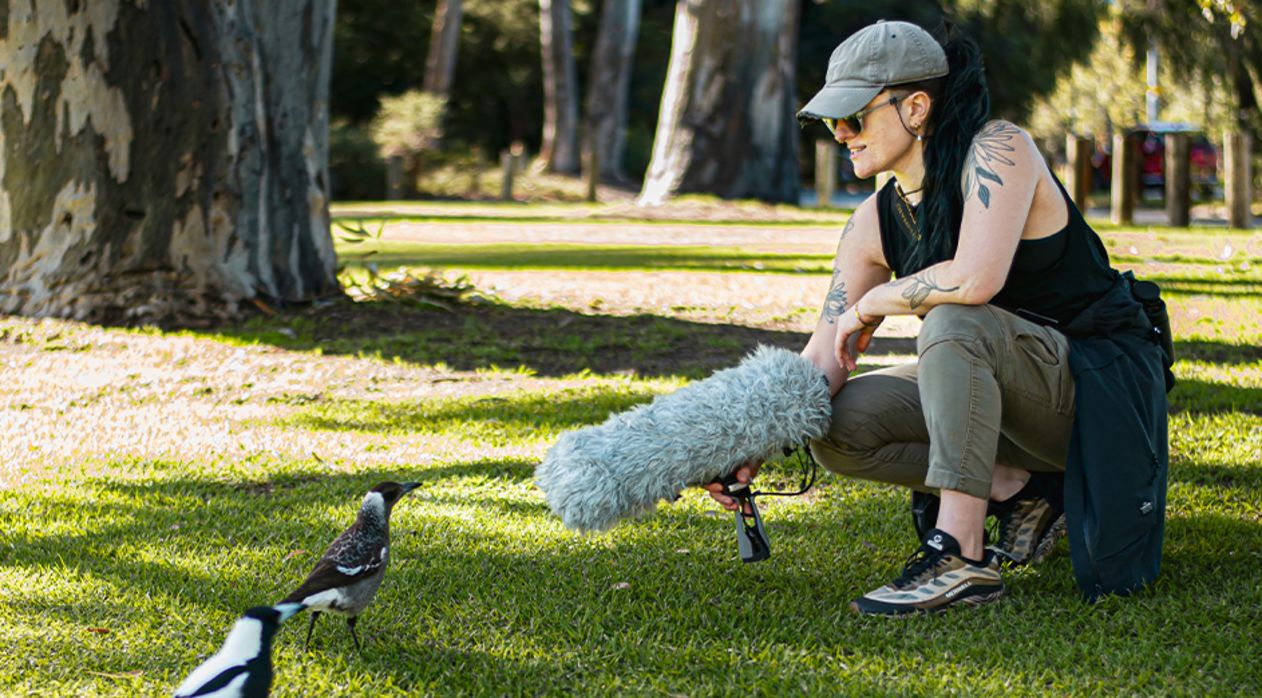
New research shows young magpies learn how to turn basic sounds into complex calls and sequences in much the same way human children learn to turn sounds into words and words into sentences.
The study, published in the journal Proceedings of the Royal Society B, provides the first evidence of learned syntax in any non-human animal.
In a project led by Dr Stephanie Mason from the Centre for Evolutionary Biology at The University of Western Australia, researchers followed 11 fledgling WA magpies for 200 days from the time they left the nest at the age of three-to-four weeks.
Each fledgling was recorded for an hour at a time at weekly intervals for the first 100 days – the main period of vocal learning – and then once every three weeks for another 100 days, to track how and when they developed their vocal repertoire.
“Magpies aren’t born knowing complex call sequences,” Dr Mason said. “Rather, here we show they appear to start life with basic in-built calls and develop more sophisticated call sequences through social exposure.
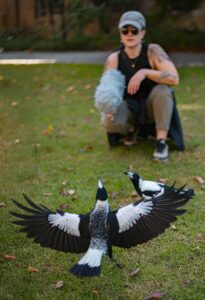
UWA Magpie vocalisation research
Images credit: Andrew Leslie
“Similarly to the way human toddlers learn sounds, words and then sentences, magpies initially make small, simple sounds and then learn from others in their social group how to combine these building blocks into meaningful sequences.”
The researchers found social connection was a key factor in how quickly and effectively individual fledglings learned. “Previously it’s been shown in various species that simply being part of a larger group leads to more complex communication, but what we saw in the magpies was more nuanced,” Dr Mason said.