Rare Nabarlek wallaby rediscovered in Kimberley after 50 years
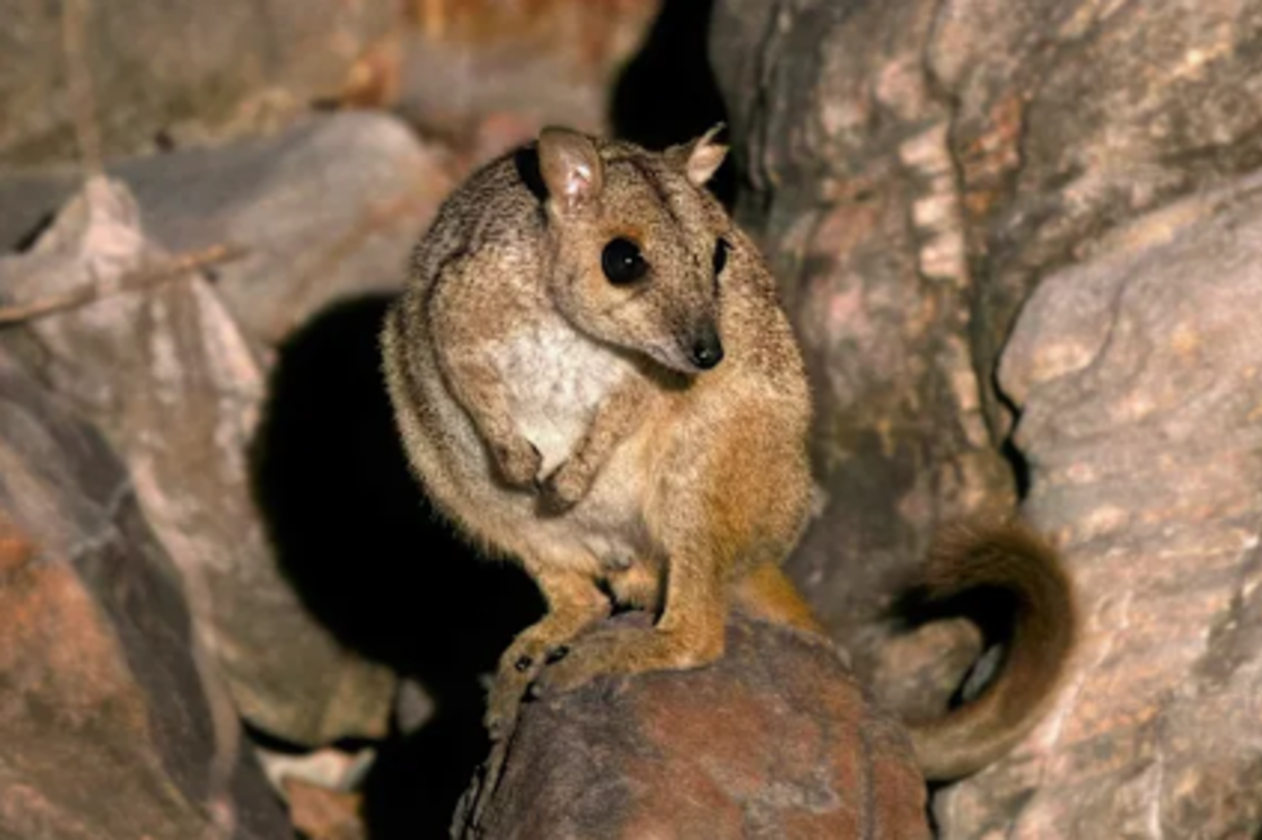
Conservationists have confirmed the presence of the Nabarlek at two new locations in WA’s Kimberley region, providing important new clues about where this tiny and threatened wallaby is surviving and where conservation efforts may be most needed.
Weighing just 1.2 kilograms and measuring around 36 centimetres long, the Nabarlek is one of Australia’s smallest wallabies. This sighting offers fresh hope for one of Australia’s most elusive threatened mammals. Its remote, rocky habitat and striking resemblance to other rock-wallaby species have made it notoriously difficult to find and study.
The new detections were made in partnership between the Australian Wildlife Conservancy (AWC) and Dambimangari Aboriginal Corporation (DAC). Images and scat samples confirmed Nabarlek at Yampi Sound Training Area on Dambeemangaddee Country, one of 20 priority places identified under the Australian Government’s Threatened Species Action Plan.
A second population was confirmed about 170 kilometres away in the north-east of Dambeemangaddee Country. Together, the records represent the first confirmed detections of Nabarlek on mainland Dambeemangaddee Country in more than 50 years, and the first known record from Yampi Sound Training Area.
Once thought to be widespread across parts of northern Australia, Nabarlek populations have declined significantly. In the Northern Territory, recent records are scarce and the species is thought to have disappeared from the Victoria River district. In the Kimberley, Nabarlek have previously been recorded on five offshore islands and a small number of mainland sites.
Camera traps capture images of small brown wallabies moving through the landscape. Researchers then collect scat samples from promising sites and send them for DNA analysis. Once genetic testing confirms Nabarlek, researchers can return to the camera images and identify the species’ distinctive physical characteristics.
This combination of photography and genetics is helping build a verified image library that will make future detections easier and strengthen the ability to monitor populations over time. The work also highlights the importance of combining Traditional Owner knowledge with contemporary conservation science.
The discovery on mainland Dambeemangaddee Country provides an opportunity to learn where Nabarleks are surviving, understand what they need to persist, and work alongside Traditional Owners to protect the Country and ecosystems of which they are part.
For more information on AWC’s partnership on Dambeemangadee Country, click here, and for more information about the Nabarlek, click here.